Web App | TMS | GIS
Increased response efficiency by 94% with new platform
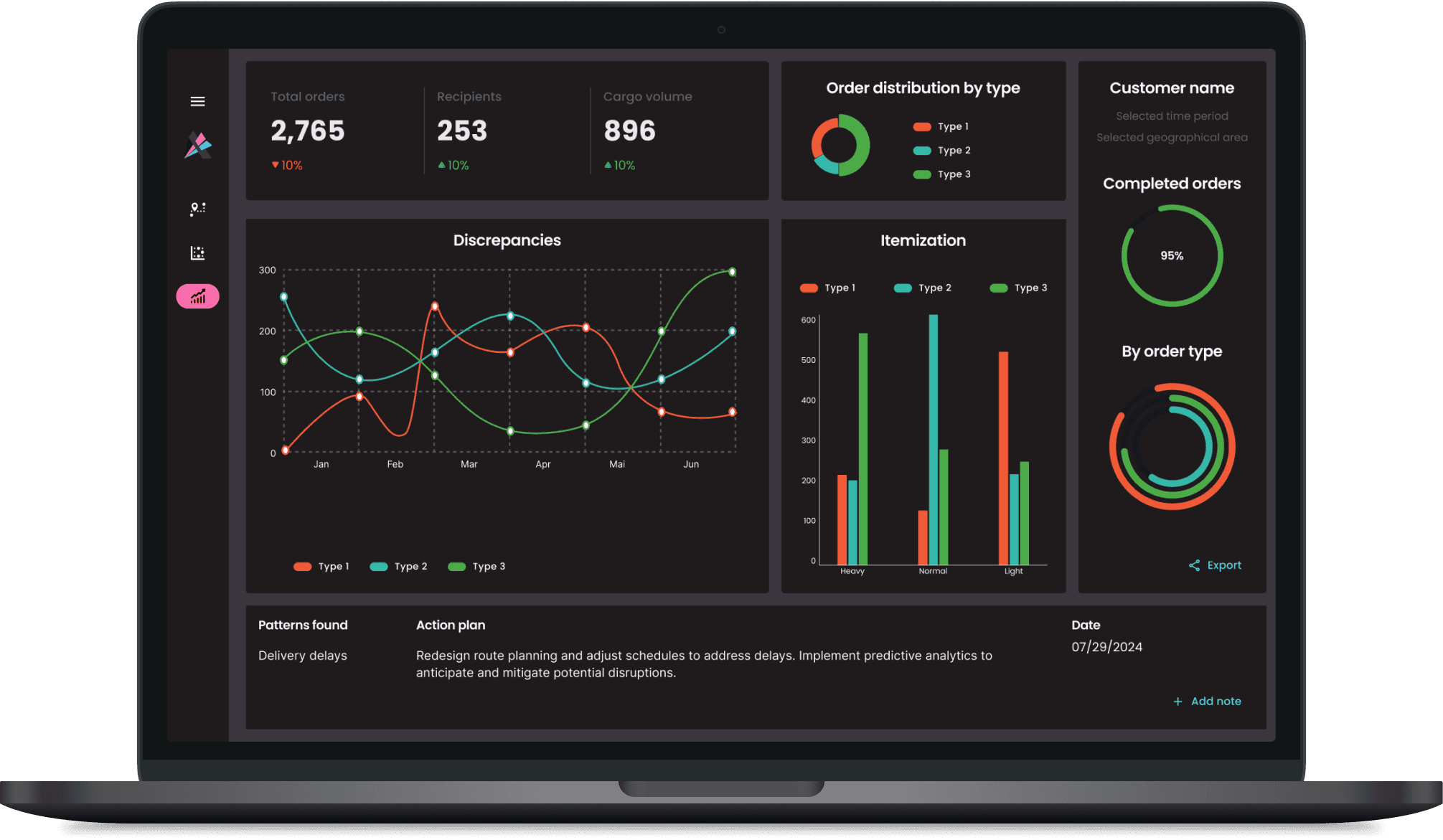
Overview
The Transport Management System (TMS) was designed for a Swedish logistics company to replace a legacy platform that lacked usability, visibility, and real-time insights. The new web application provides actionable data, performance metrics, and real-time delivery updates to improve decision-making and reduce delivery delays.
Scope
Role: UX Designer (collaborative team of 5)
Responsibilities: Research, personas, IA, wireframes, prototypes, usability testing
Tools: Figma, Miro, stakeholder interviews, usability testing
Results
94% increase in delivery issue response efficiency
Improved clarity in logistics data through redesigned dashboards
Faster user decision-making and reduced reliance on external tools
Positive feedback from stakeholders on usability and operational alignment
Challenge
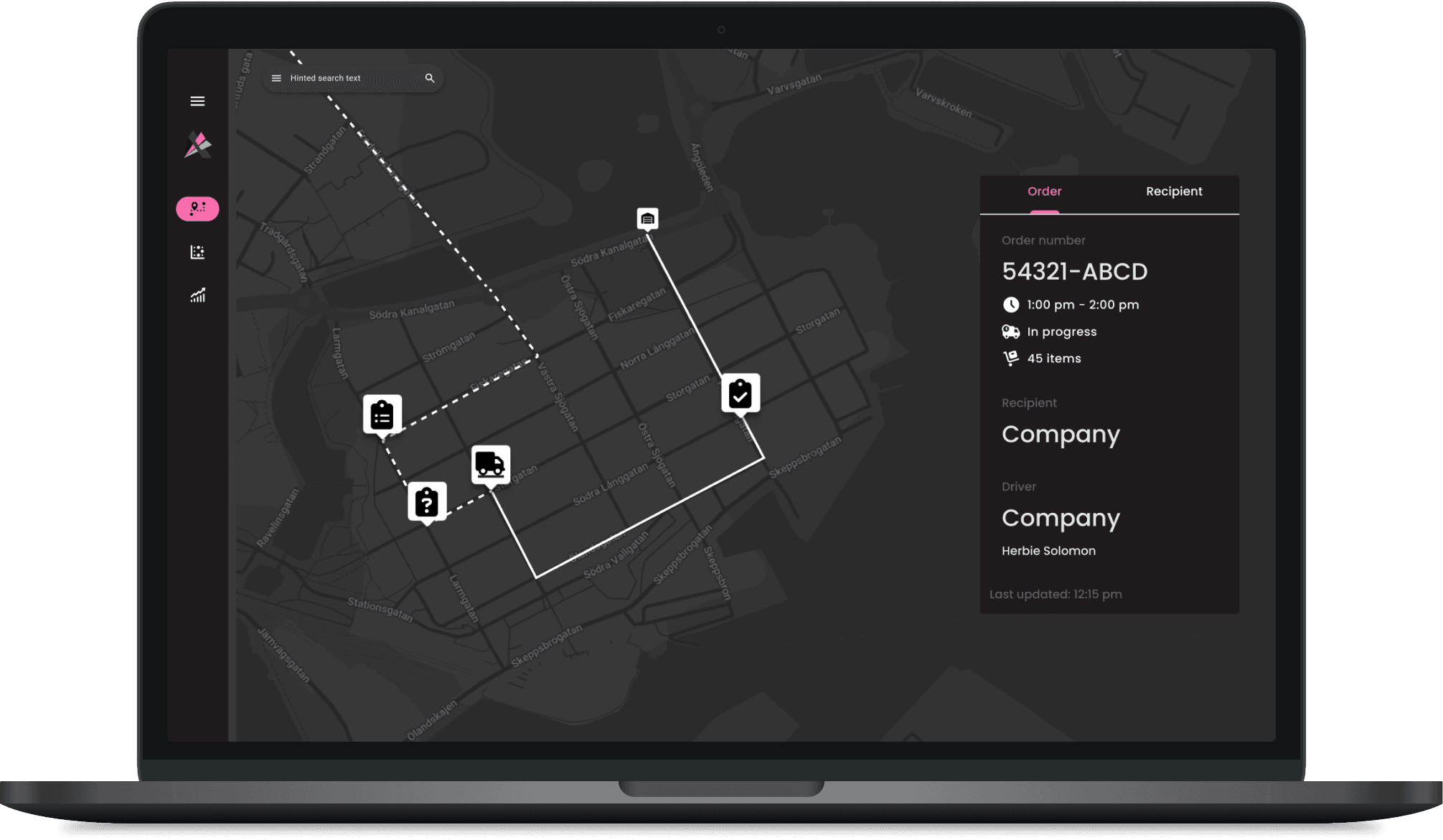
The company’s outdated logistics system caused operational inefficiencies and user frustration. Teams struggled with fragmented workflows and had no access to actionable performance data or real-time delivery tracking, making it difficult to respond to delivery issues quickly.
Goal
Design a modern web-based TMS that empowers users to monitor logistics in real time, make data-informed decisions, and improve operational responsiveness.
Process
Discovery
Conducted stakeholder interviews to understand business goals and operational pain points.
Interviewed end users with different roles across the logistics chain to map out varying needs and frustrations.
Developed personas and user scenarios to reflect distinct goals and workflows.
Design
Created wireframes and prototypes in Figma, focusing on clear task flows and intuitive data visualizations.
Designed dashboards that prioritized actionable insights and reduced information overload.
Used accessibility and usability principles to support a wide range of user skill levels.
Validation
Facilitated multiple rounds of usability testing with logistics personnel.
Iterated on designs based on user feedback to clarify navigation, highlight delivery issues faster, and improve dashboard usability.
Solution
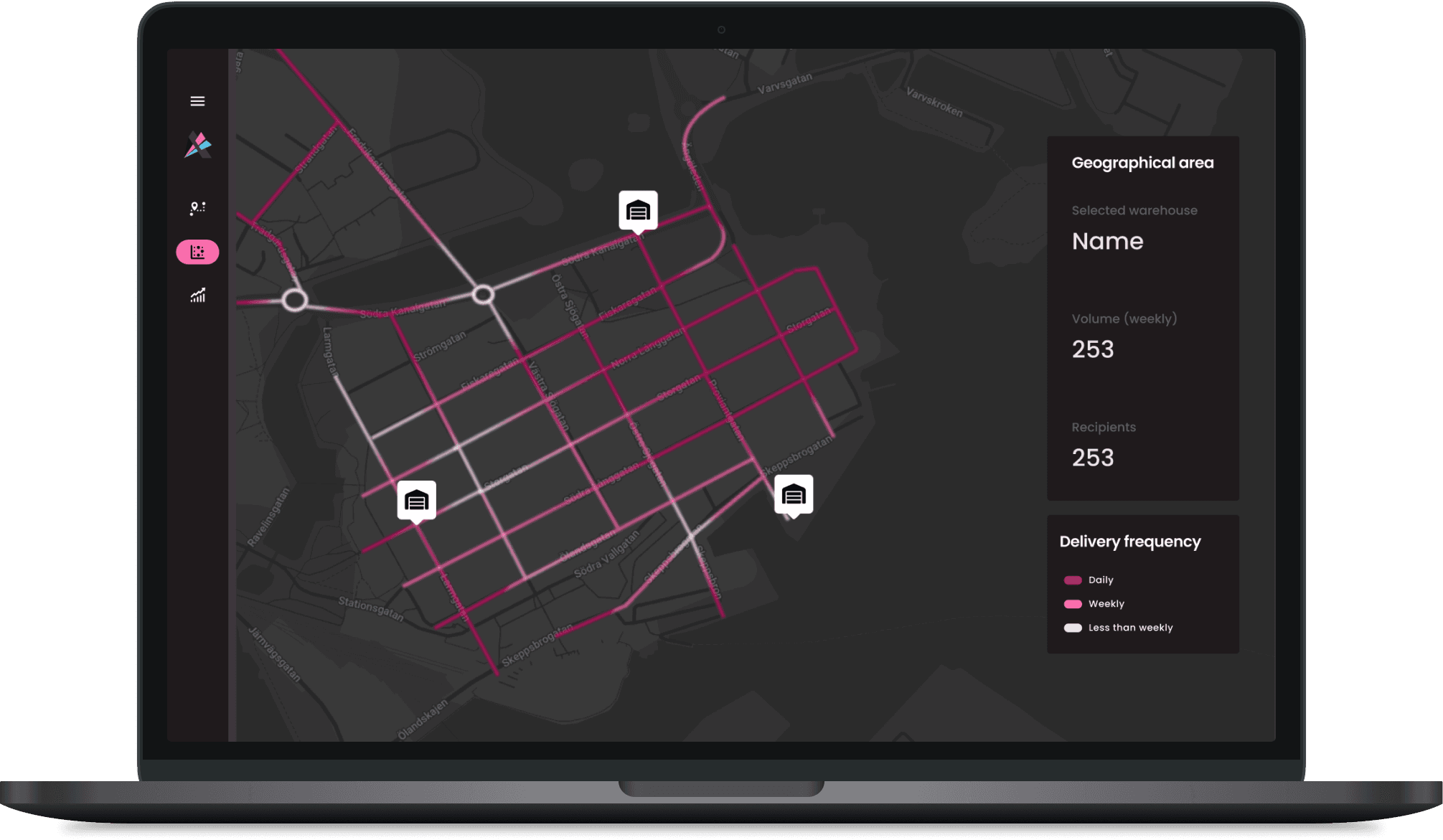
A web-based platform offering real-time delivery tracking, interactive dashboards, and performance metrics. Designed to replace manual, error-prone processes and help users act on logistics data with speed and confidence.
Impact
94% increase in delivery issue response efficiency
Improved clarity in logistics data through redesigned dashboards
Faster user decision-making and reduced reliance on external tools
Positive feedback from stakeholders on usability and operational alignment
Key takeaways
Aligning user research with stakeholder priorities ensures both business and user goals are met.
Collaborative design across roles improves inclusivity for diverse workflows.
Clear, actionable data empowers users to make faster, better decisions in time-sensitive environments.